Venous Hemodynamics and Intermittent Pneumatic Compression
Intermittent pneumatic compression applies time-dependent external pressure to the lower limb and alters tissue deformation and venous blood flow. We develop computational models to quantify the coupled effects of compression settings, tissue mechanics, and venous-network dynamics. Our framework combines one-dimensional deformable blood-flow models, three-dimensional tissue mechanics, and lumped-parameter venous networks to simulate full compression cycles in simplified and subject-specific geometries. These models support mechanics-based assessment of venous flow, pressure, and wall shear stress under different device and patient conditions.
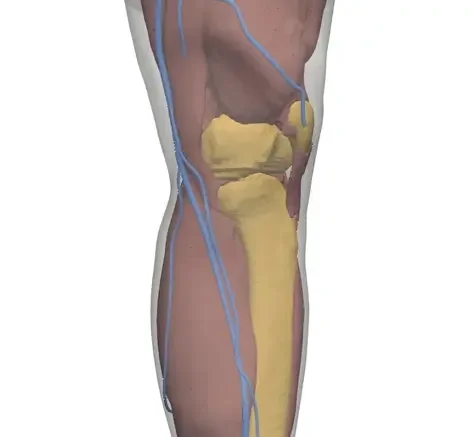
Multi-Fidelity Modeling of Compression-Induced Flow
We couple one-dimensional deformable venous flow with three-dimensional tissue mechanics and an upstream lumped-parameter network to represent the interaction between external compression, tissue deformation, and venous transport. This multi-fidelity formulation enables full-cycle simulations of intermittent pneumatic compression at substantially lower computational cost than full three-dimensional fluid–structure interaction models.
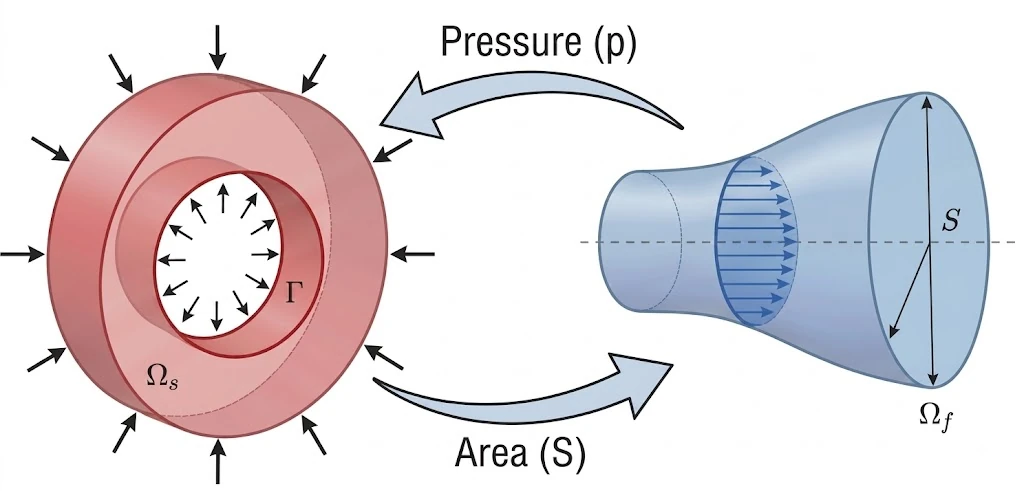
Effects of Compression Parameters
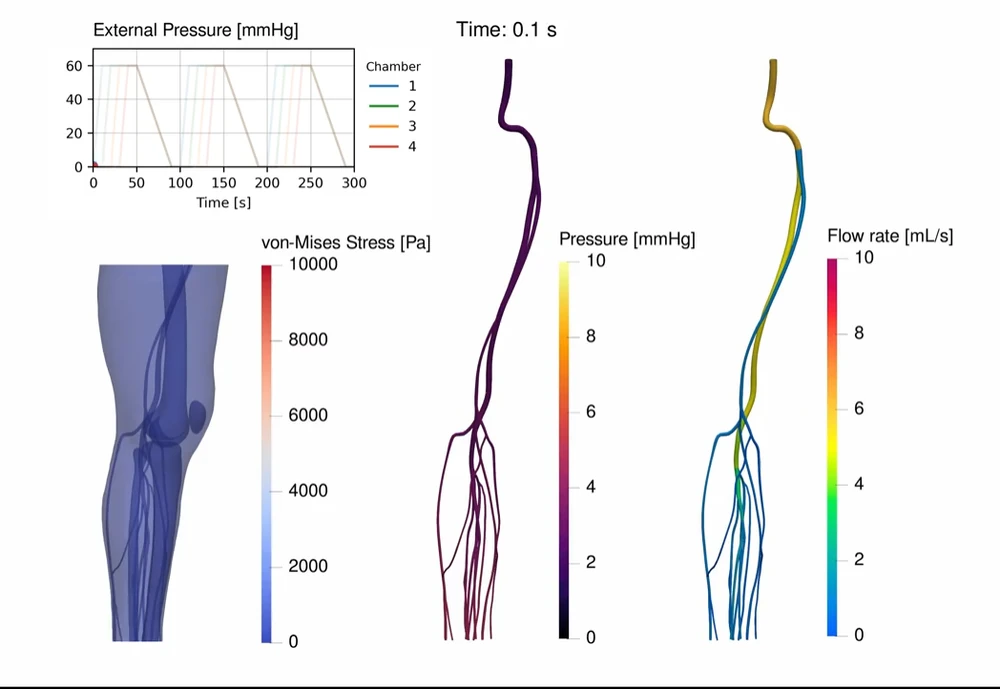
We perform parametric analyses to determine how peak compression pressure, hold duration, chamber configuration, and actuation conditions affect lumen deformation, venous flow, pressure, and wall shear stress. Under the investigated conditions, peak pressure and hold duration are the principal determinants of the hemodynamic response. Increased pressure produces greater lumen narrowing and flow variation, whereas a longer hold duration promotes distal blood accumulation and increases peak flow and pressure during release. Chamber number has a smaller influence when the chambers operate under uniform actuation conditions.
Tissue Mechanics and Subject-Specific Response
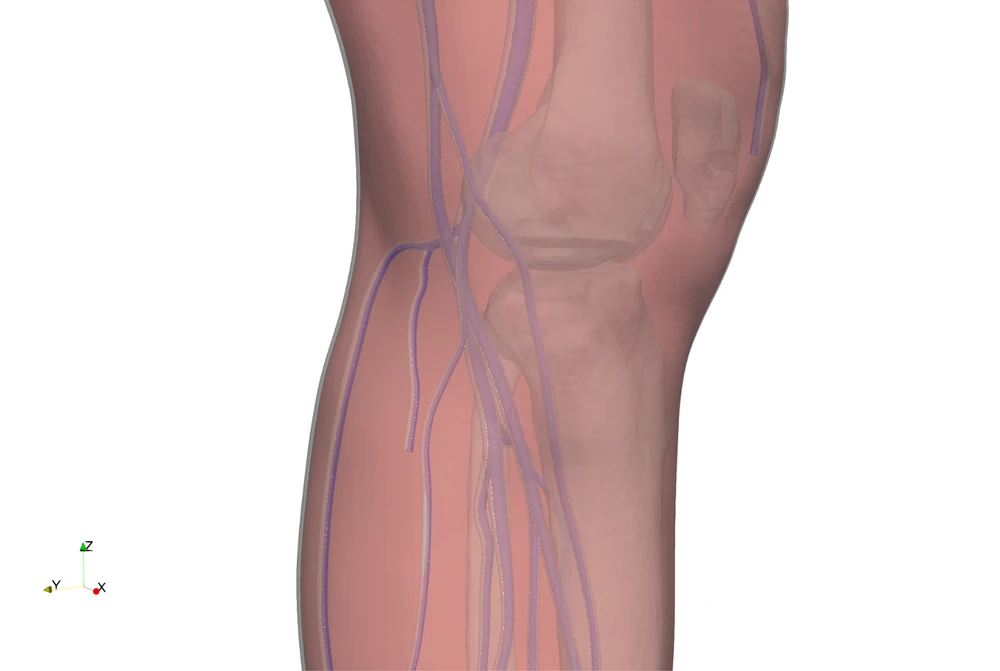
We examine how lower-limb tissue properties affect compression-induced deformation and venous hemodynamics. More compliant tissues exhibit greater deformation and stronger changes in venous flow, pressure, and wall shear stress. Subject-specific geometries and tissue composition allow the framework to evaluate inter-individual variation and provide a basis for patient-specific assessment of compression strategies.
Experimental Comparison
Ultrasound measurements of femoral venous velocity and cross-sectional area are used to compare the predicted and observed responses to intermittent pneumatic compression. This comparison provides experimental support for the simulated changes in venous flow and vessel deformation.
Selected work
Computers in Biology and Medicine 212:111767
Annals of Biomedical Engineering